Israel Indo-Pacific relations

Israel Indo-Pacific relations

ABOUT THE PROGRAM

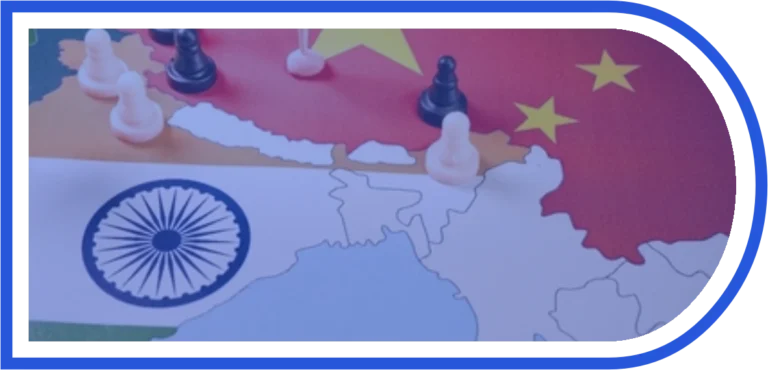
The Indo–Pacific is emerging as a geopolitical arena with growing importance for Israel. It carries decisive weight in the global economy, in energy and natural resources, defense and homeland security industries, critical supply chains, and in developing advanced technologies. The competition between the U.S. and China in the Indo-Pacific is intensifying, prompting Washington to shift more attention and resources to the region. In that backdrop, different strategic axes are forming, with direct and implicit impact on Israel.

For Israel, this is a strategic space that offers significant opportunities in the diplomatic, economic, security, and technological spheres, and as such requires strategic thinking about international positioning, partner selection, and risk management.

The region offers a path to strategic cooperation with prominent countries. First and foremost is the world’s largest democracy, India, which continues to climb in global rankings and consolidate its status as a major power. India is the world’s most populous country, with a young population, a growing technology sector, and one of the largest economies – making it a particularly important partner for Israel. Other key countries in our focus for the region include Japan, South Korea and Indonesia.

The region offers a path to strategic cooperation with prominent countries. First and foremost is India, which continues to climb in global rankings and consolidate its status as a major power. India is the world’s most populous country, with a young population, a growing technology sector, and one of the largest economies – making it a particularly important partner for Israel. 

Program Director

Dr. Michal Hatuel Radoshitzky             

Researchers

Aran Haupt

Senior Advisor

Amb. Danny Carmon


Program Director

Dr. Michal Hatuel Radoshitzky             

Researchers

Aran Haupt

Senior Advisors

Amb. Danny Carmon

"To ensure that the growing Israel-India partnership becomes irreversible, Israel must cultivate ties across India’s political spectrum, while preserving the trust built with the current government."

Source:MIND's strategy for engagement with India's political establishme (May 2026)

"India’s response to the Strait of Hormuz crisis reflects Modi’s classic doctrine: preserving strategic autonomy, avoiding one-sided alignment, and using diplomacy to protect concrete energy and economic interests."

Source: MIND's policy analysis: Developments in the Strait of Hormuz: The Indian Perspective (March 2026)

"India is becoming one of Israel’s most important strategic partners: a source of strategic redundancy in a changing West, a stable anchor beyond the Middle East, and a rising technological-economic power."

Source: "India is becoming one of Israel’s most important strategic partners: a source of strategic redundancy in a changing West, a stable anchor beyond the Middle East, and a rising technological-economic power." (February 2026)

RECENTLY IN THE MEDIA

64ca2a626e35720cb0af8c87_1 YNET ידיעות-04
"When we were at war, India was there for us. Over the past year, during their Operation Sindoor—the conflict with Pakistan—Israel stood by its side. As the entire world turns toward Asia, Israel has a significant anchor in the region." (25.2.26)

Dr. Avner Golov

64ca2a626e35720cb0af8c87_1 YNET ידיעות-04
"…deepening cooperation with India, along with Greece, Cyprus and the United Arab Emirates, could help anchor a regional framework linking India to Europe through Israel" (25.2.26)

Dr. Avner Golov

הורדה (1)
"Both India and Israel found themselves fighting on the same abstract battlefield: the narrative. Disinformation has become a strategic tool, no less than missiles or tanks. Whoever manages to control the story does not always have to control the terrain." (14.5.25)

Roni Yacobi

Skip to content